 Supreme
Can't sleep on that shoulder?
It aches when you reach for the seatbelt. Lying on that side wakes you up. Throwing, serving or pressing overhead now comes with a sharp catch. Your rotator cuff is four small muscles doing a big job and they're telling you they're overloaded.

Nick Monczakowski 4.9 from 74 Google reviews · 13+ years
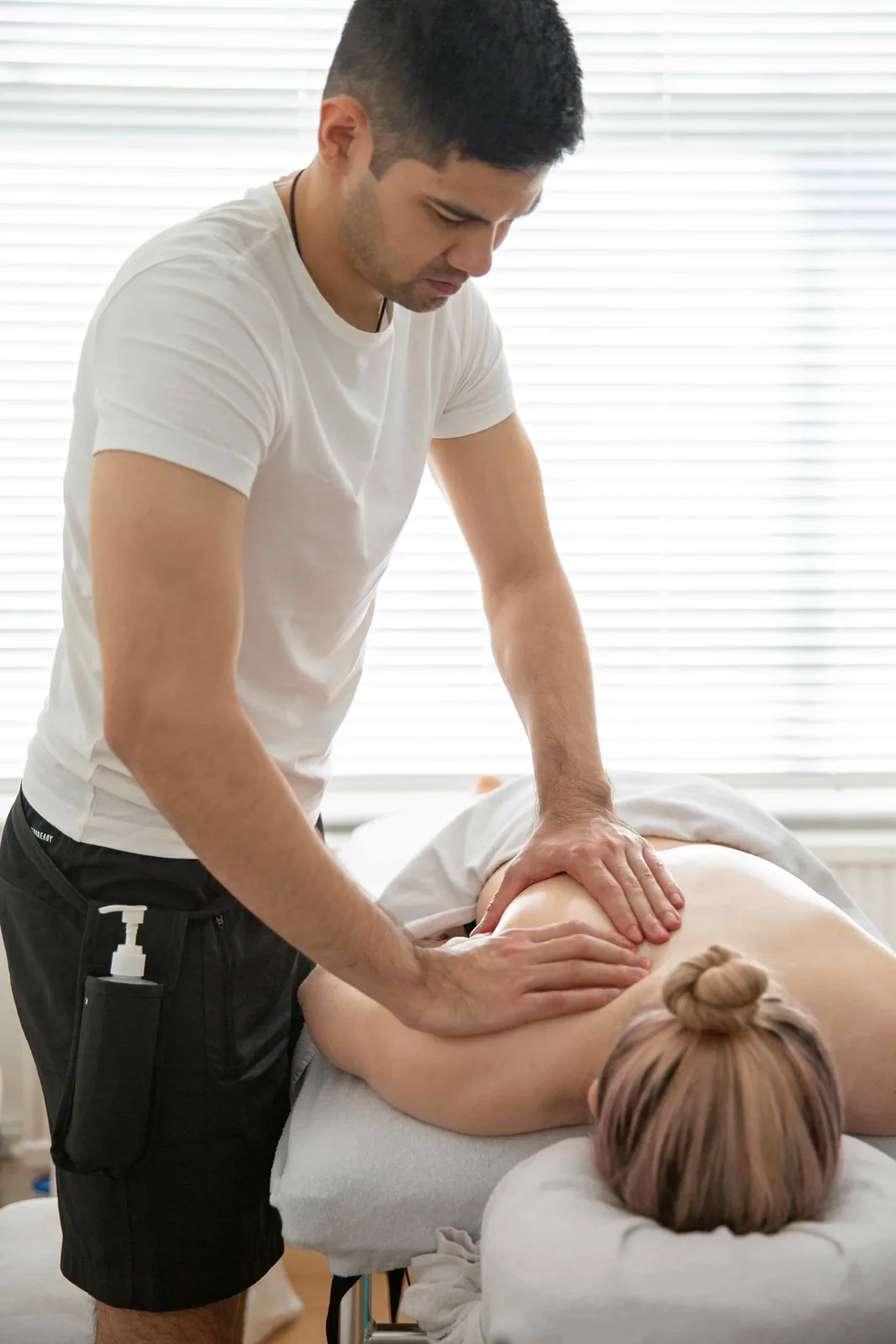
Small muscles. Big job.
Too little space.
A tight chest and forward shoulder squeeze the gap the cuff tendons run through. Every reach overhead pinches them a little more.
Too much, too soon.
A new sport, a heavier lift or a weekend of painting. Tendons need time to adapt and a sudden jump in load irritates them.
The shoulder blade isn't helping.
When the muscles holding your shoulder blade are tired or tight, the cuff has to steady the arm on its own. It can't keep that up.
Four muscles. One job each.
Together they keep the ball of your arm centred in the socket while bigger muscles do the lifting. When one isn't pulling its weight, the others struggle.
Supraspinatus
Helps lift the arm out to the side. The one most often pinched when you reach overhead.
Infraspinatus
Turns the arm outwards. Works hard in throwers and racket players and a common source of ache at the back of the shoulder.
Teres minor
Small but busy. Helps rotate and steady the arm when you throw or serve.
Subscapularis
Turns the arm inwards. Hidden under the shoulder blade and often tight in desk workers and gym regulars.
Rotator cuff myths. Busted.
“It must be a tear.”
Tap to flip →Plenty of rotator cuff pain is overload and irritation, not a tear. If Nick suspects a tear, he'll tell you and point you to the right person.
“Rest it until it stops hurting.”
Tap to flip →Complete rest lets the cuff weaken further. The right amount of movement, kept comfortable, helps it recover.
“An injection will sort it.”
Tap to flip →Injections can calm the pain for a while. They don't change what overloaded the cuff in the first place.
Make room. Take the load off.
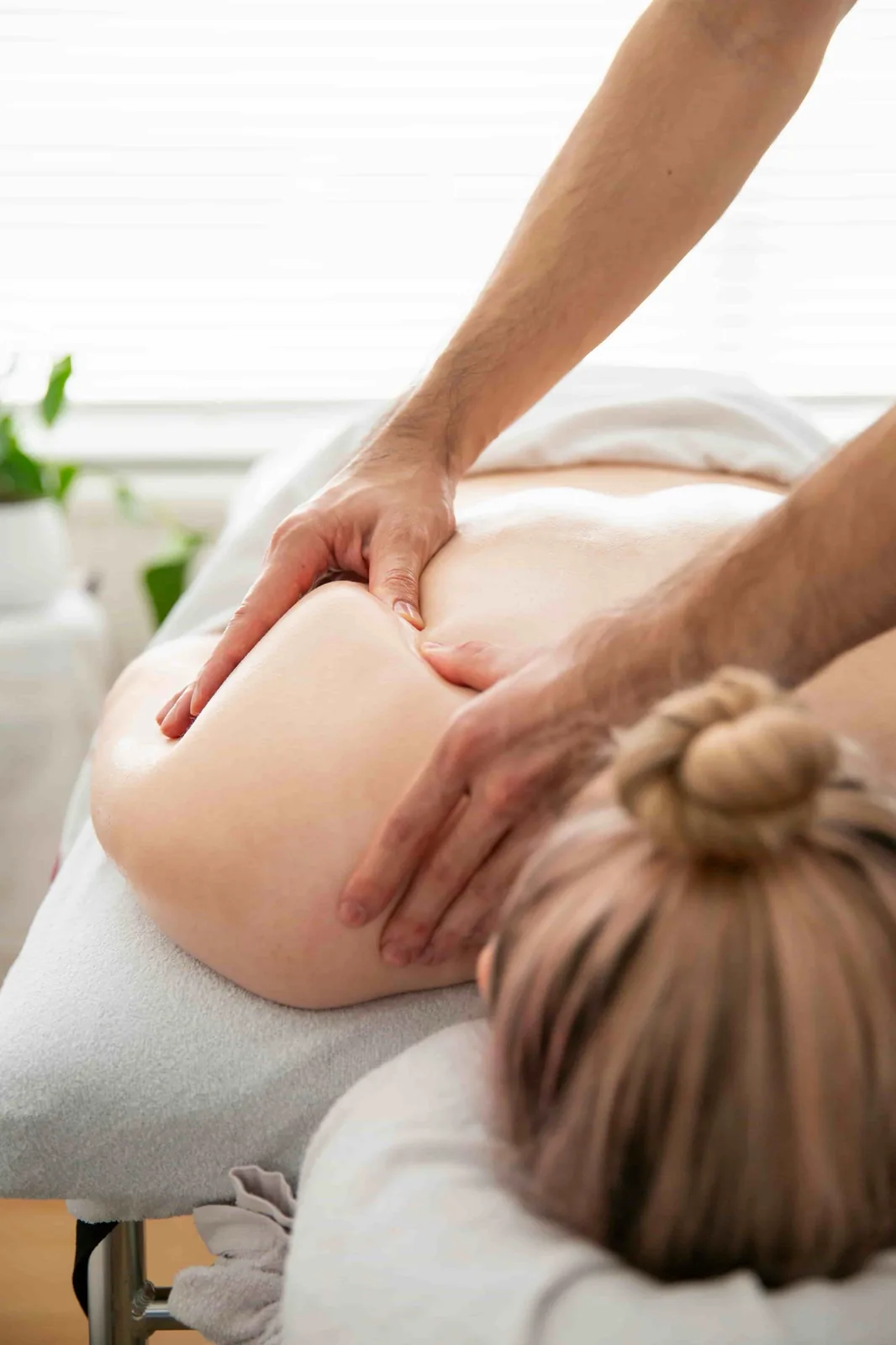
Infraspinatus, teres minor & subscapularis
Direct work on the cuff muscles to ease the ache and get rotation back.
Pec minor & chest
Creates space at the front so the tendons stop getting pinched.
Traps, rhomboids & serratus
Helps the shoulder blade move and sit well, so the cuff isn't doing all the work.
RockTape taping
Kinesiology taping can support the shoulder between sessions if it helps you stay active.
One hour. A shoulder plan.
- 01
Talk
When it started, what you've been lifting or playing and what sets it off.
- 02
Assess
Hands-on assessment of the cuff, chest and shoulder blade, plus how your arm moves.
- 03
Treat
Release of the cuff and the muscles crowding it, at a pressure that suits an irritated shoulder.
- 04
Plan
What to keep doing, what to pause and simple strengthening to rebuild the cuff.
Shoulders sorted. In their words.
“I went to see him for a recurring (for about a year) right shoulder pain and left leg ache… Now my aches are gone thanks to him.”
Elvin · Shoulder & leg“I've had 3 sessions with him and my shoulder is back to normal and feeling great.”
Mr Tea · Shoulder“Nick definitely have done a good job taking care of me whenever I am in pain, muscle fatigue or post tennis tension.”
Will · Tennis playerBefore you book for your rotator cuff.
Can sports massage help rotator cuff pain?
Yes, for most rotator cuff pain from overload or irritation. Treatment works on the cuff muscles and the chest, upper back and shoulder blade muscles that affect them. It eases pain and gives you room to move while you rebuild strength.
Is massage safe if I've torn my rotator cuff?
It depends on the tear. Small or partial tears often respond well to treatment around the shoulder alongside strengthening. A recent or full tear may need a specialist first. Tell Nick about any scan results and he'll advise honestly.
Why does my shoulder hurt more at night?
Lying on the sore side squeezes the irritated tendons. Lying on the other side can let the shoulder drop forward and stretch them. A pillow under or in front of the arm often helps. Nick will talk you through comfortable positions.
How long does rotator cuff pain take to settle?
Most people notice a clear change within 3 to 5 sessions. Tendons adapt slowly, so the strengthening you do between sessions matters as much as the treatment.
Can I keep training with rotator cuff pain?
Usually, with changes. Nick will help you work out which movements to keep, which to adjust and which to pause for now, so you stay active while it settles.
When to see your GP first
Call 999 or go to A&E straight away if you have sudden shoulder or arm pain with chest pain, breathlessness or sweating.
Call NHS 111 or see your GP before booking if you have shoulder pain with any of these:
- You suddenly can't lift your arm after a fall or a heavy lift
- A hot, red or swollen shoulder, especially with a fever
- Numbness, tingling or weakness down your arm
- Pain that's severe, constant or getting worse quickly
Not sure? WhatsApp Nick a quick description first. If massage isn't the right first step, he'll tell you before you book.
Rotator cuff and its neighbours.
Sleep on that side again.
- £80 first session, assessment included
- Mon–Fri 11am–7pm
- Near New Malden station · free street parking
- Personal reply from Nick, usually same day
“Nick has not only successfully treated my physical ailments, but has also helped me understand the underlying causes and helped me to put in place strategies to prevent the issues from reoccurring.”