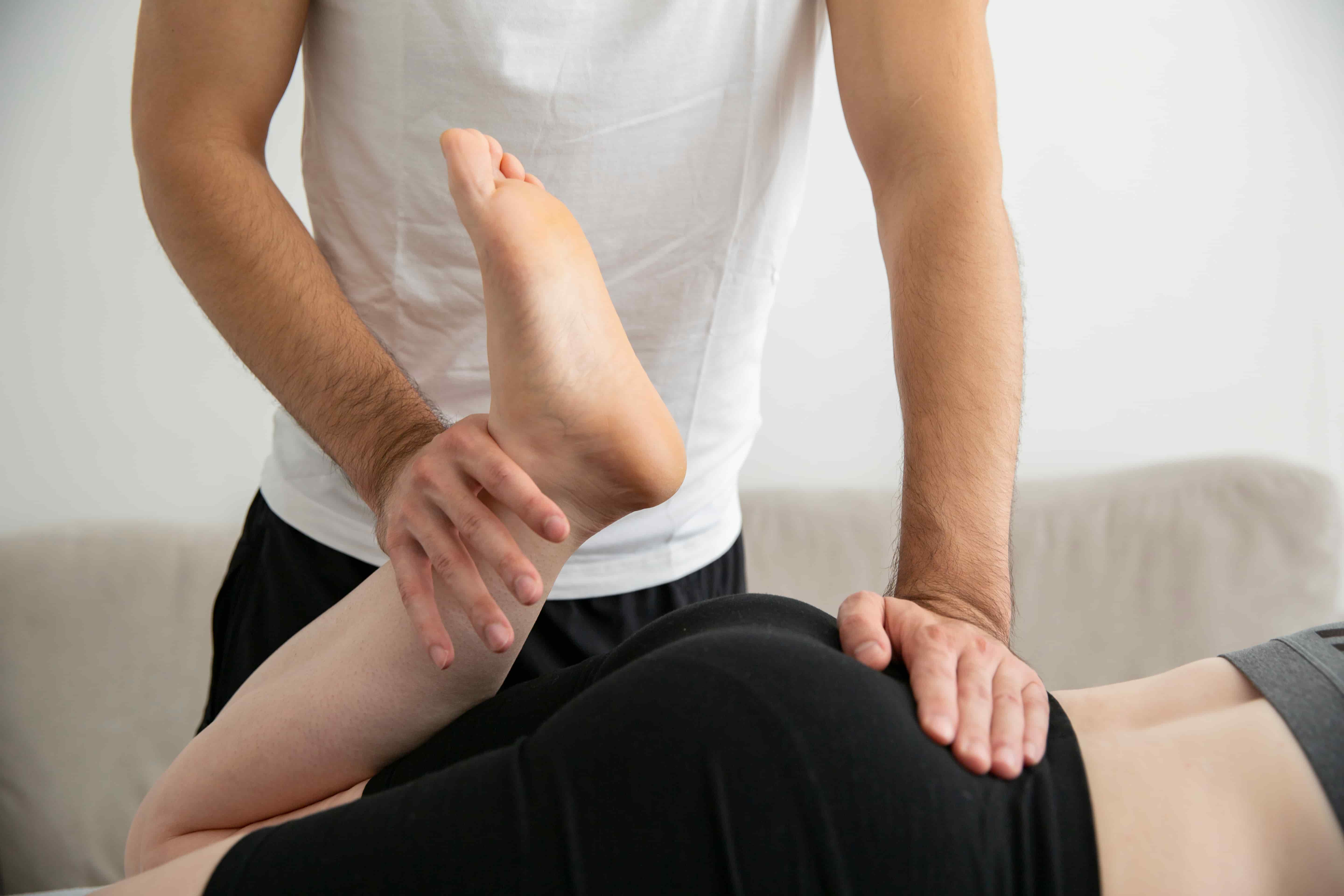
Targeted soft tissue treatment for shin splints (medial tibial stress syndrome) at Beverley Road, New Malden KT3 4AW. BTEC Level 5, 66 five-star reviews. First session £80.
Shin splints is the aching, burning or sharp pain along the inner edge of the tibia, and one of the most common overuse injuries in runners. The pain is felt in the bone, but the cause is almost always muscular: the tibialis posterior, soleus and deep calf muscles becoming tight and overloaded, pulling repeatedly on the periosteum (the bone's outer covering) until it becomes inflamed.
This is why rest alone rarely produces lasting results. As soon as running resumes, the same tight muscles place the same load on the same part of the bone. Targeted soft tissue work on the contributing structures removes that load, allowing the periosteum to recover without requiring extended rest from training. Shin splints frequently cluster with calf strain and plantar fasciitis in runners increasing mileage.
The primary driver of medial shin pain. It attaches along the inner tibia, and when chronically tight it pulls on the bone with every foot strike. Releasing this muscle is the single most effective treatment for most shin splint cases.
The deeper of the two calf muscles. It works exceptionally hard during running, especially uphill or on increasing mileage, and becomes the primary load-bearer when the Achilles complex is fatigued.
The superficial calf and toe-flexor muscles compensate when the deep compartment fatigues. Treating the whole lower leg compartment, not just the pain site, produces lasting resolution.
The most common presentation: marathon training mileage increases, speed work on hard surfaces, or new runners building volume too quickly.
Shin splints and plantar fasciitis frequently co-exist, both driven by the same overloaded calf complex. Treating the calf addresses both conditions simultaneously. See plantar fasciitis.
Common in new runners whose calves are not yet conditioned to running load. Early treatment prevents progression to stress fracture, the outcome that can occur if shin splints are ignored and training continues.
Treatment focuses on the deep calf complex (tibialis posterior, soleus and the surrounding compartment) rather than the shin itself; directly massaging the irritated bone covering is not appropriate in the acute phase, but releasing the muscles pulling on it is. Nick will ask about your running load, footwear history and how the pain behaves, then treat the specific muscles driving the problem. You leave with stretching, strengthening and load management advice: how to maintain fitness while the periosteum recovers, reducing mileage temporarily rather than stopping completely.
First session £80 (usually £100) · view all rates · 🏛️ MSMA member; private health insurance may cover sessions, receipt provided on request.
"Having been in tears thinking my Copenhagen Marathon was over with a calf injury four weeks out, Nick was incredibly thorough. I was able to make it to the start line and finished in 3 hours 6 minutes."
CharlieMarathon Runner · Google Review"Nick helped me cross the London Marathon finish line happy and injury free. His advice was excellent, with great suggestions for avoiding injury and home stretches to keep me on track."
LucyMarathon Runner · Google Review"I visited Nick after experiencing tight painful calves during my marathon training. I had 4 sessions in the lead up to the marathon, noticing a big difference after the second session and continued improvement after that. I was pleased to complete my first marathon, starting on legs that felt fresh after weeks of hard training."
AnnaMarathon Runner · Google ReviewRead all 66 reviews on the reviews page.
Yes. Shin splints (medial tibial stress syndrome) respond well to targeted soft tissue work on the tibialis posterior, soleus and deep calf muscles that are placing load on the periosteum. Treatment reduces the tension in these structures, allowing the irritated bone covering to settle. Most runners notice significant improvement within 2 to 4 sessions when combined with appropriate load management.
Complete rest is rarely necessary and often counter-productive for training-phase runners. The goal is to reduce the load on the tibia while addressing the muscular causes, the tight, overloaded calf and tibialis posterior pulling on the bone. Soft tissue treatment alongside a temporary reduction in mileage is more effective than stopping completely.
With appropriate treatment and load management, most shin splints cases improve significantly within 3 to 6 weeks. Without addressing the muscular causes, shin splints tend to recur as soon as training resumes. 2 to 4 treatment sessions focused on the calf complex, plus biomechanical advice, produces lasting results for most runners.
First session £80 (usually £100): assessment and treatment in the same appointment at Beverley Road, New Malden KT3 4AW.